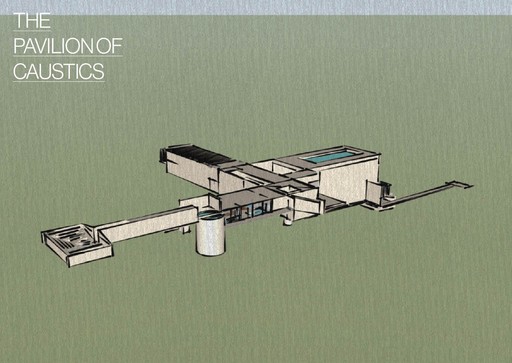
Positioned at the center of a green park, the pavilion is a subterranean, wheelchair-accessible cultural oasis designed to host evolving forms of art and public life. The earth provides natural cooling and acoustic stability, allowing the space to function efficiently and sustainably. Conceived as a flexible platform rather than a fixed typology, it accommodates recording sessions, performances, exhibitions, fashion presentations, and experimental gatherings with equal clarity. The vision is simple: create an inclusive, adaptive environment where culture is not displayed statically, but produced, rehearsed, and redefined in real time.
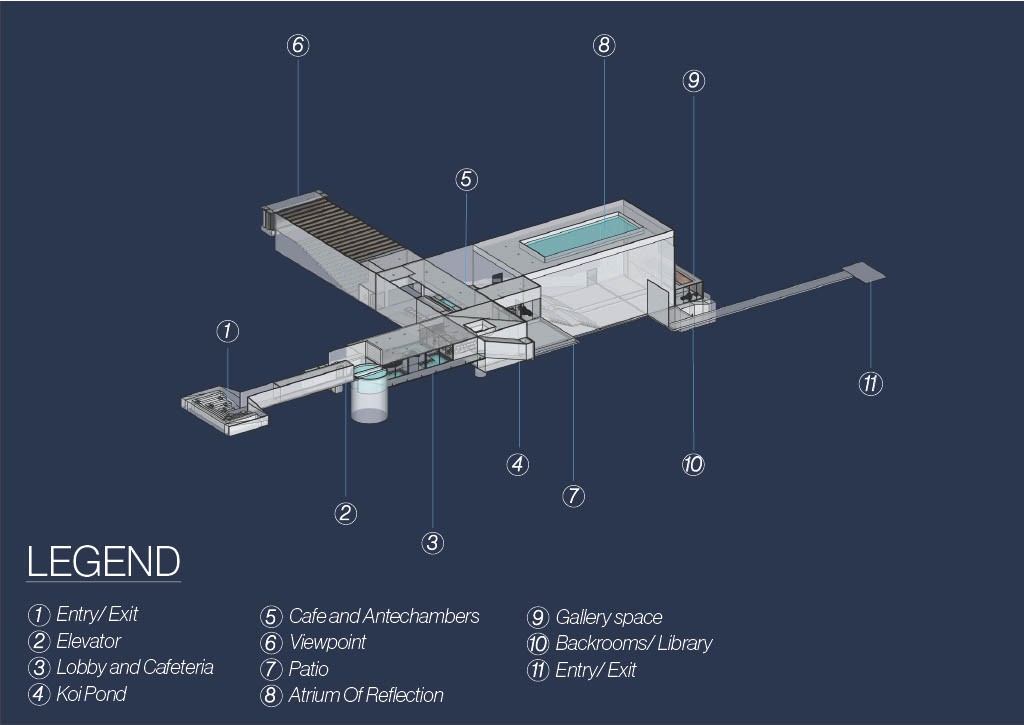
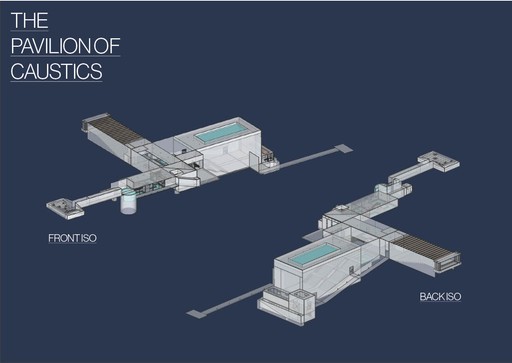
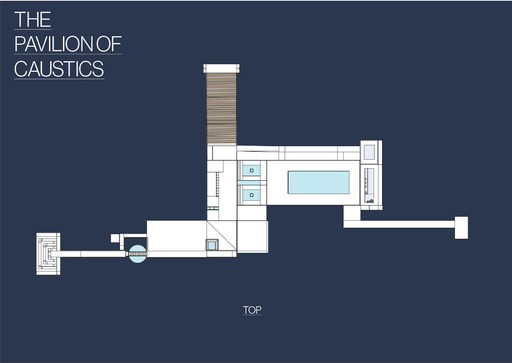
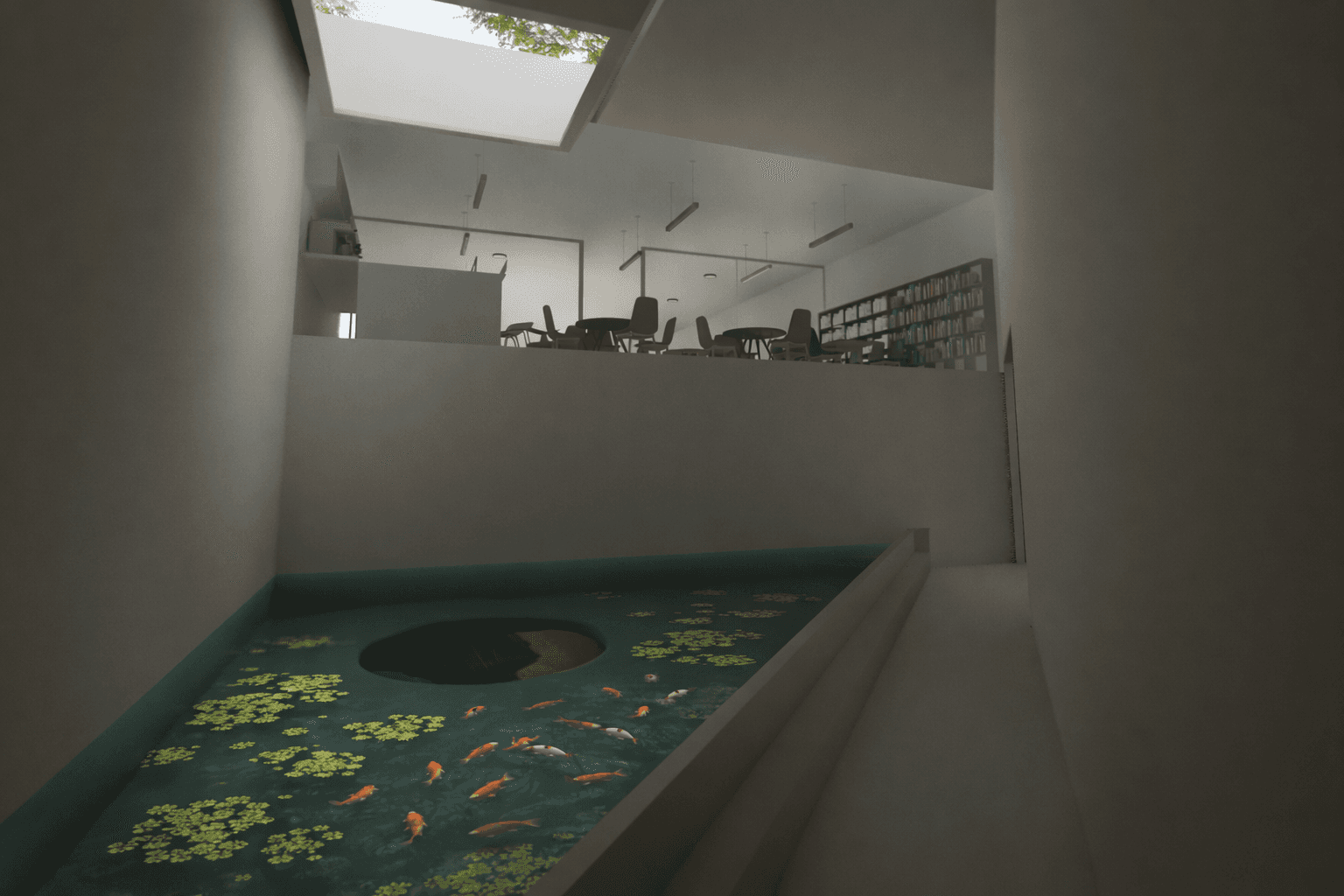
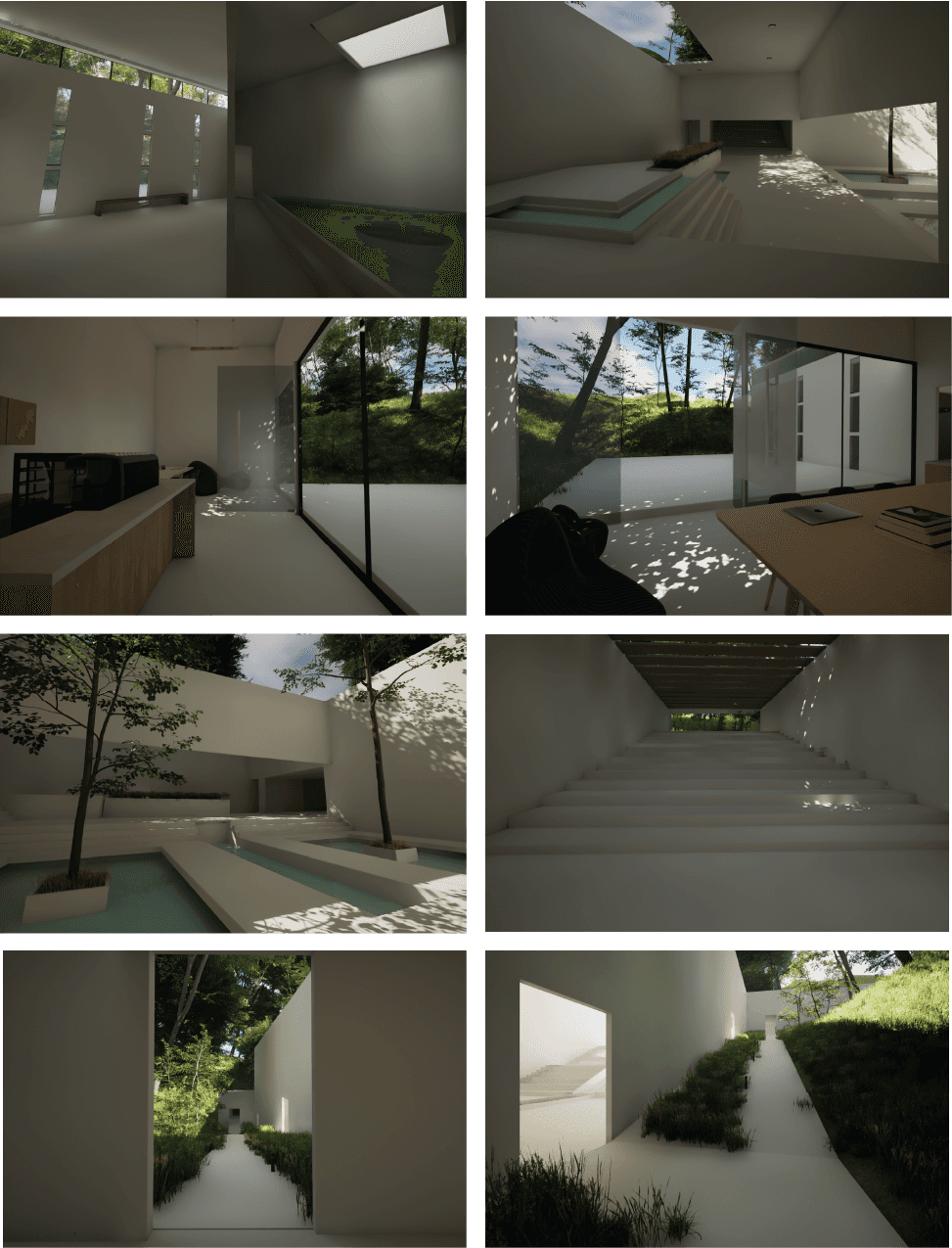
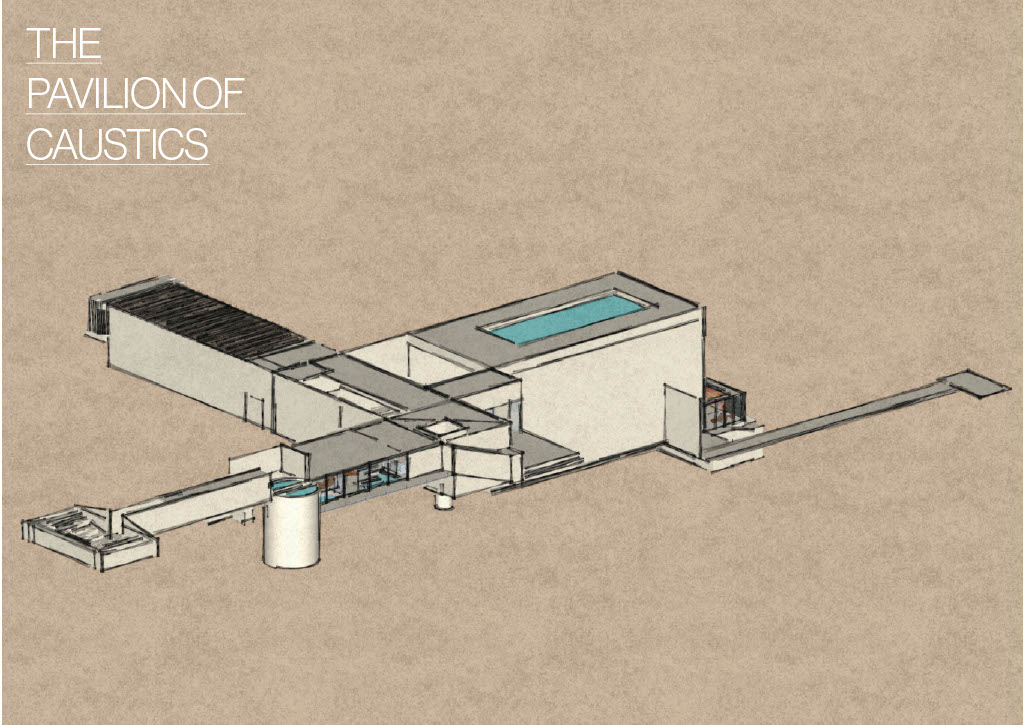
The pavilion is orgaized as a clear, linear sequence connecting two entry and exit points. Visitors move from the lobby and cafeteria through transitional spaces like the café, patio, and koi pond toward the atrium and gallery. Public and quieter zones are arranged along this path to create a gradual shift in atmosphere.
The atrium acts as the central space, bringing light into the subterranean structure and organizing the surrounding programs. Circulation, services, and water systems are integrated into the architecture, creating a cohesive spatial experience.
The Pavilion of Caustics is organized through a clear but non-linear zoning strategy that layers public, experiential and introspective programs to control how movement slows and shifts across the space. Circulation is broken by water, patios, and antechambers, preventing direct paths and encouraging reorientation at each threshold. Viewpoints and the central atrium act as spatial anchors, using light and vertical voids to structure movement rather than corridors. The gallery and library are placed deep within the pavilion, making arrival contingent on passing through zones of compression and release. The space reads as a controlled sequence where movement is freeflowing.
Pavilion Design | NID [2024]
Pavilion Design
Conceptualization
Spatial design
Simulation
The pavilion of caustics is a public commons set within a park landscape acting as a catalyst for arts, culture, and recreation. The mission of the pavilion is to be inclusive and accessible for all, functioning as an open platform for cultural exchange and recreation.
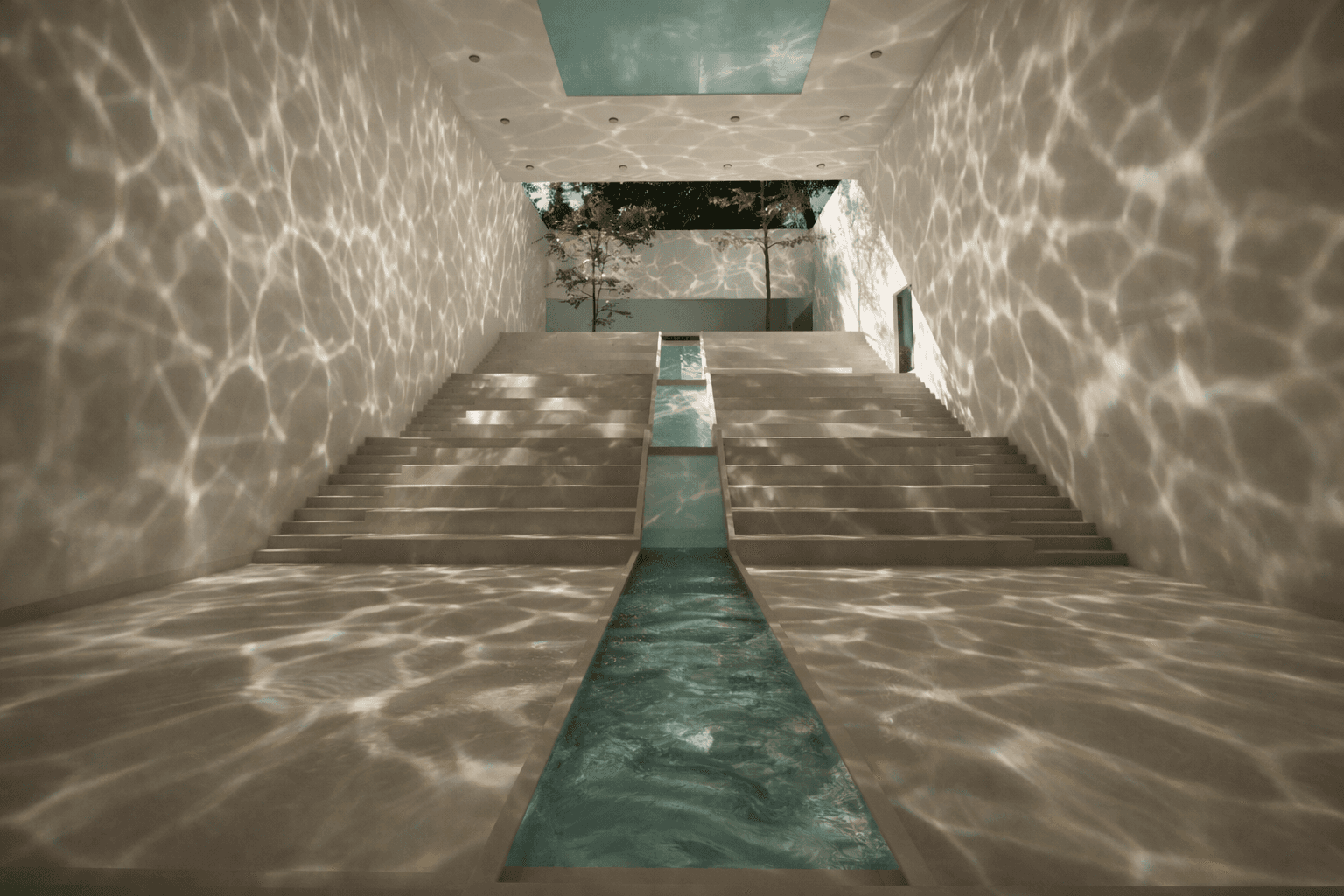
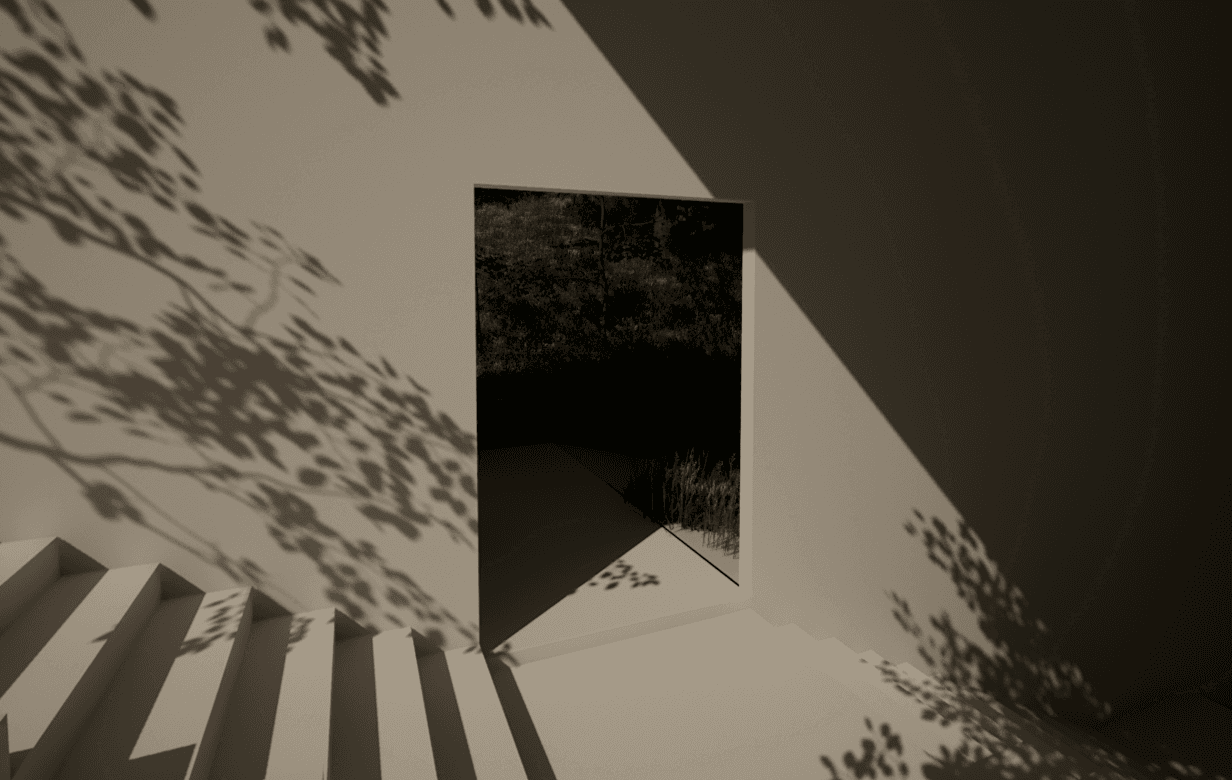
The pavilion places water at the center of its spatial experience, using it as both climatic moderator and atmospheric element. Its inspiration draws from the stepped geometry of Rani ki Vav, reinterpreting the traditional stepwell as a contemporary, semi-open public structure. Rather than replicating ornament, the project adopts its depth, descent, and relationship to water through a modern, minimal architectural language.
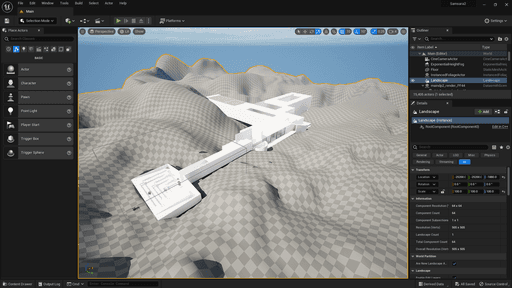
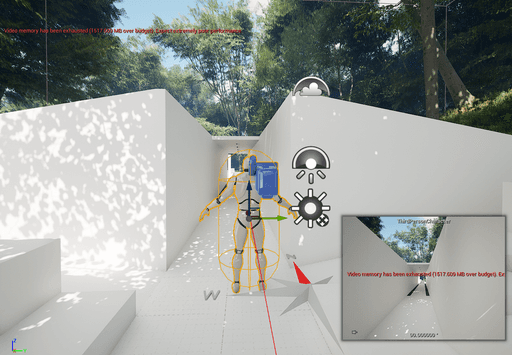
Developed as Design Project 02, the pavilion was modeled in SketchUp and tested as a fully navigable simulation in Unreal Engine to study light, scale, and movement in real time.
It is conceived as a framework for cultural activity and recreation encouraging engagement and participation.
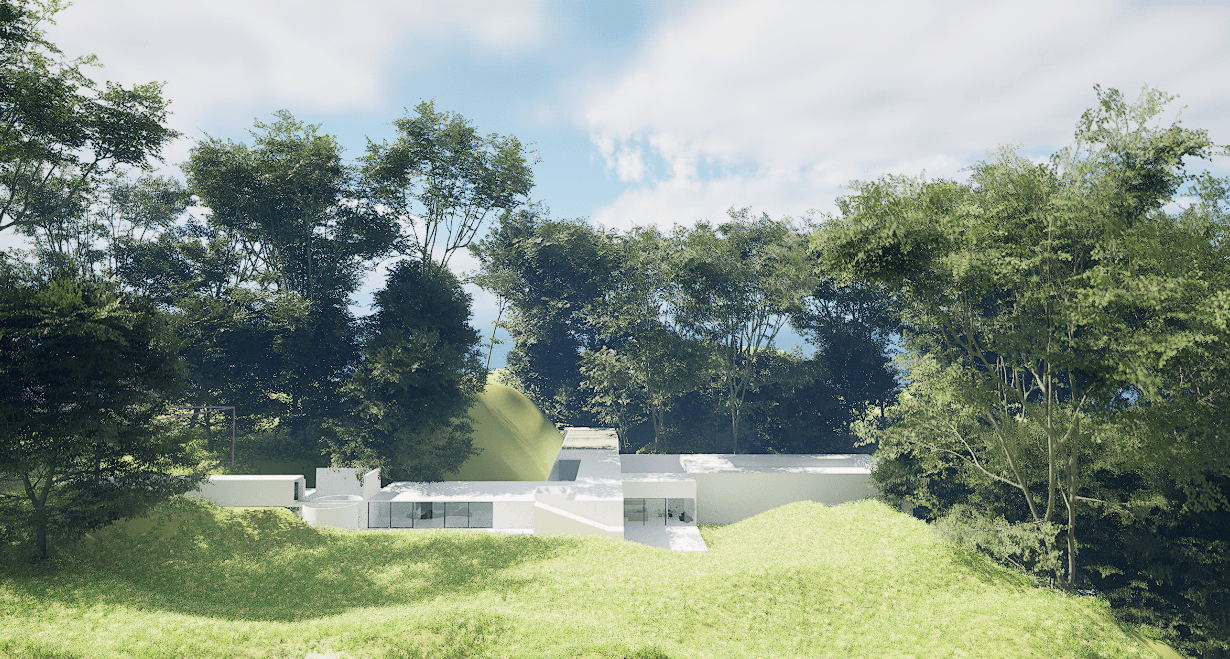
Exterior



The space functions as a semi-open, multipurpose space, providing shade, a cafeteria, an amphitheatre, a galleria, office spaces, washrooms, and a commons. It integrates a self-sustained water filtration and storage system, supporting both practical needs and environmental resilience. The design encourages circulation, interaction, and varied experiences across its spaces while maintaining a cohesive architectural language with minimal energy consumption.
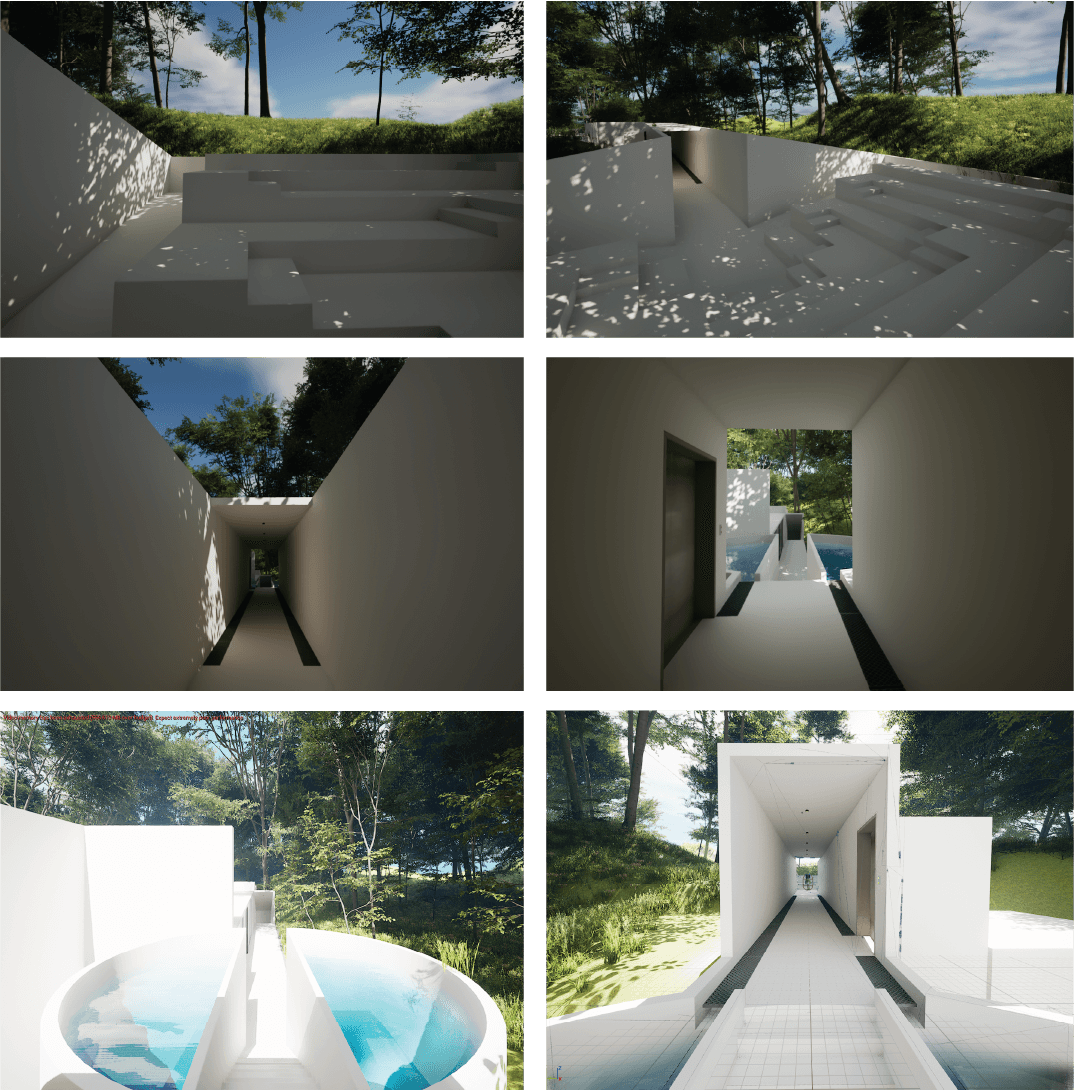
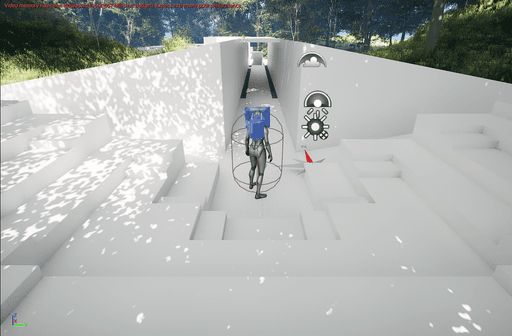
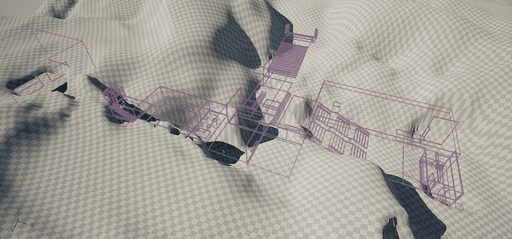
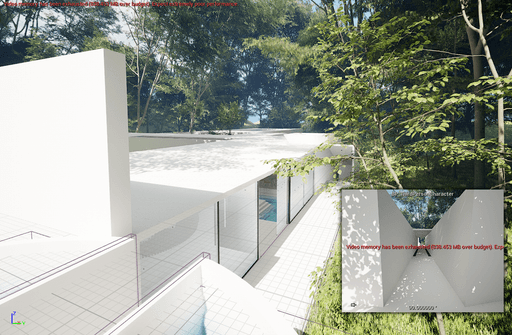
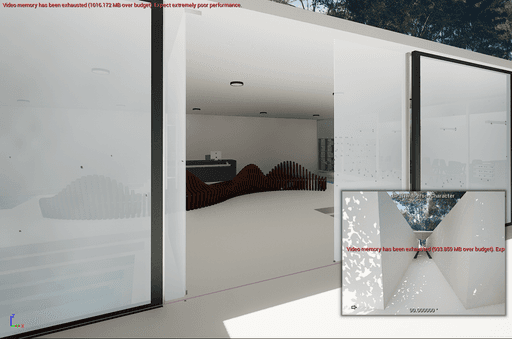
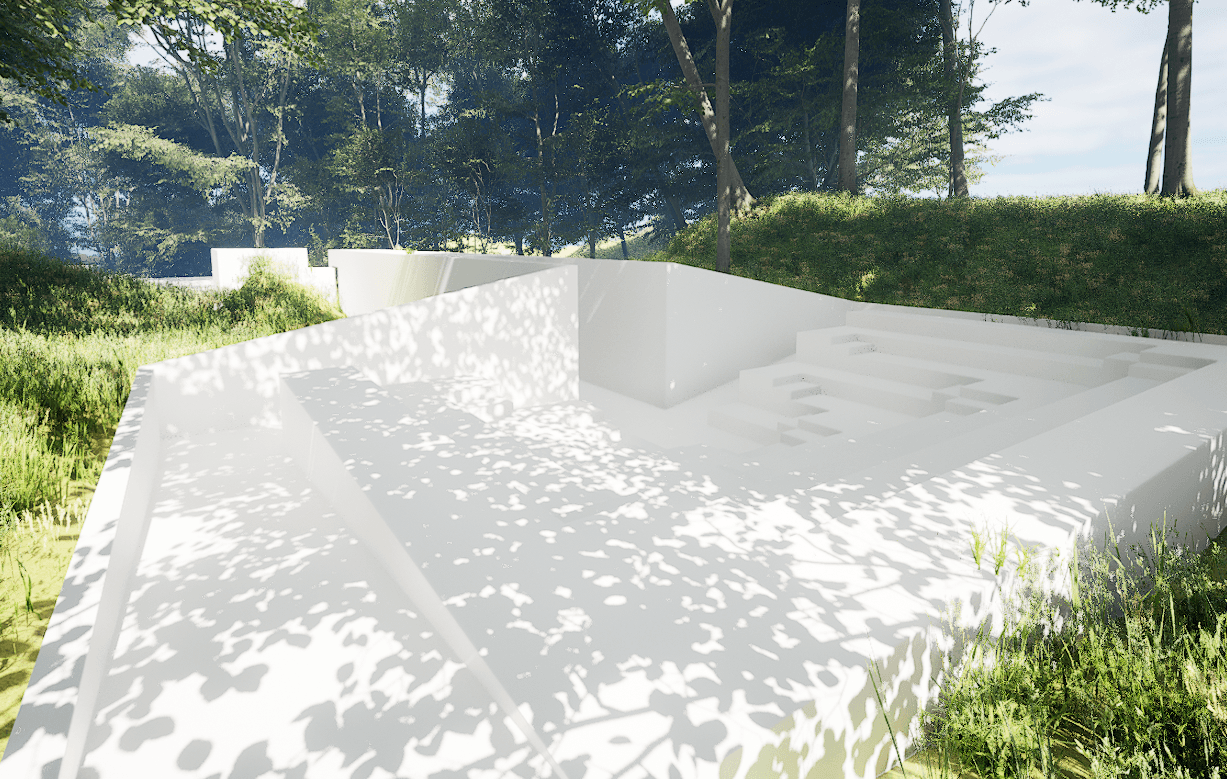
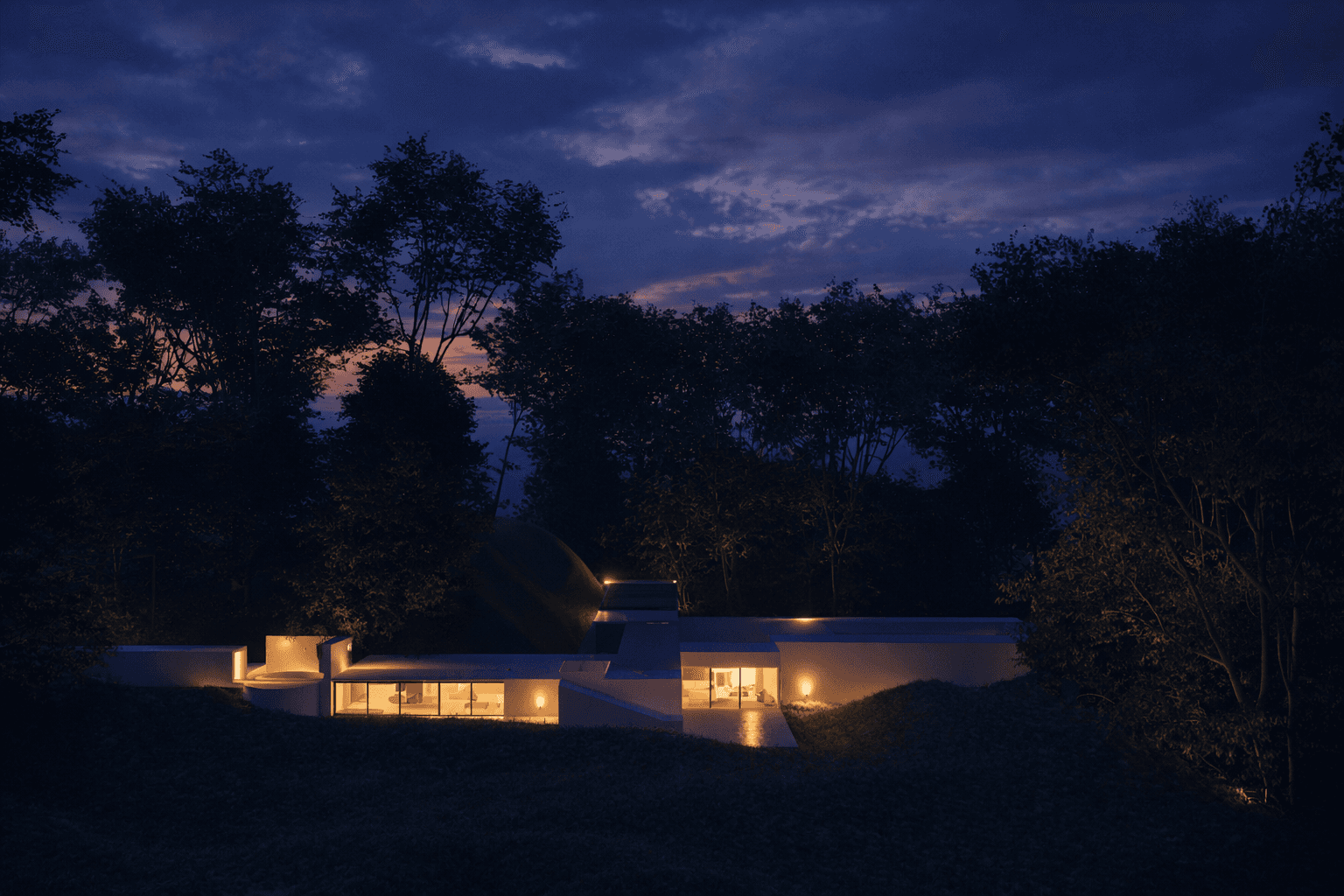
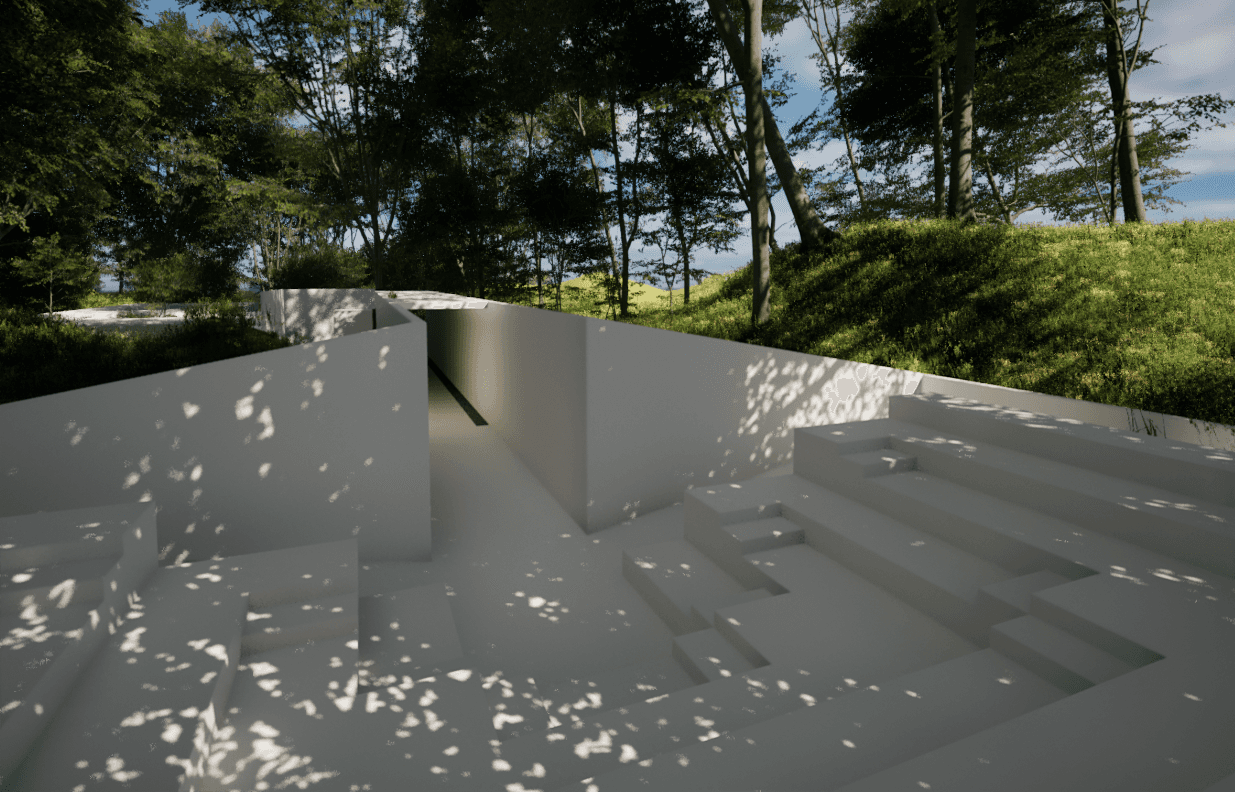
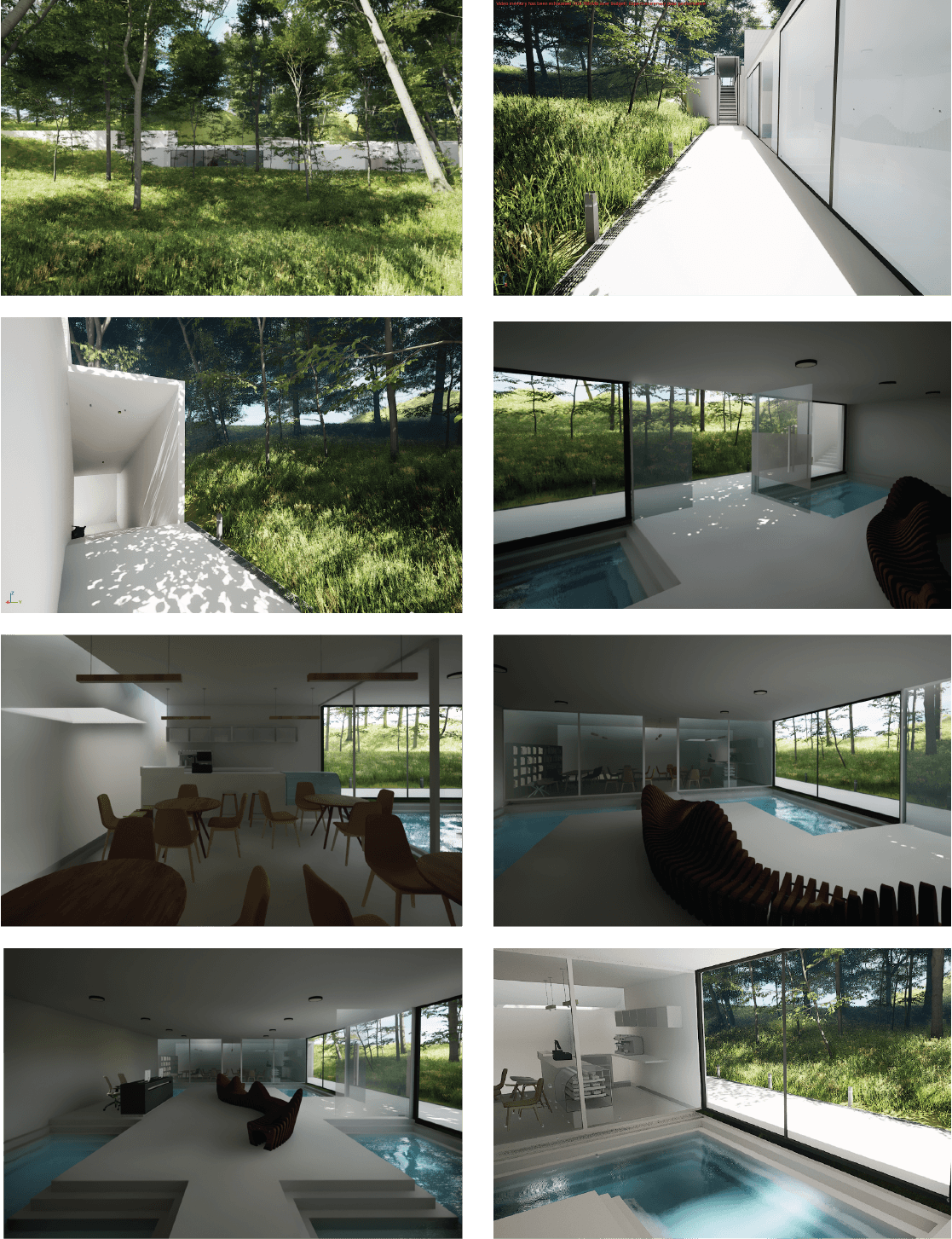
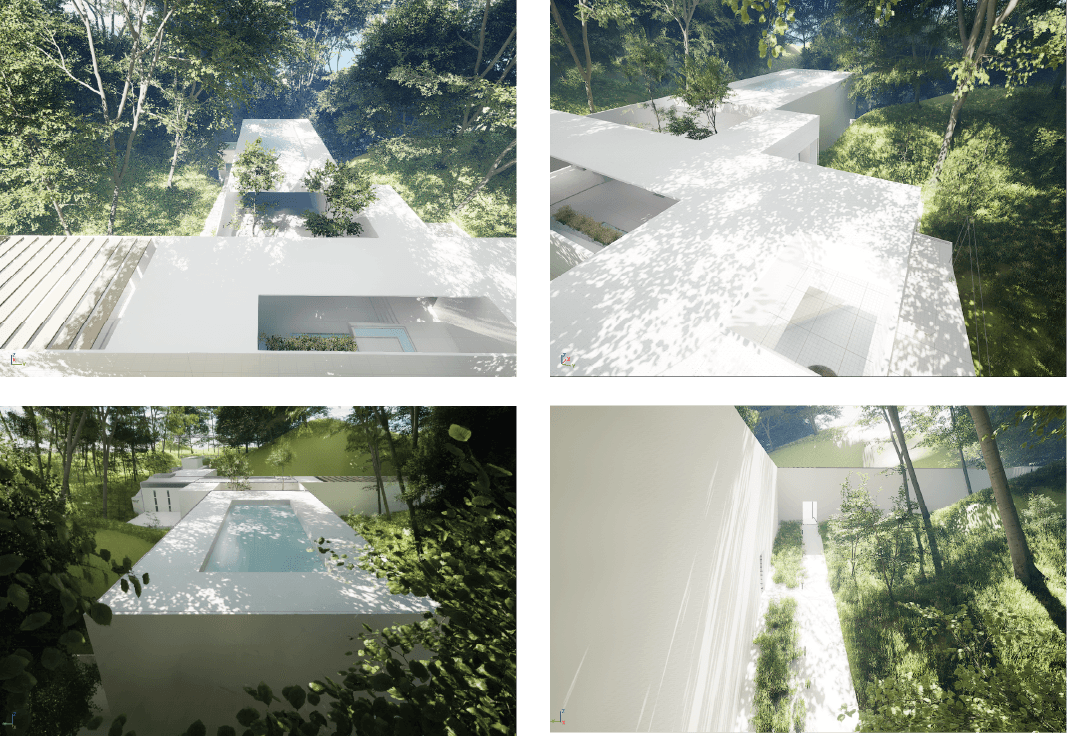
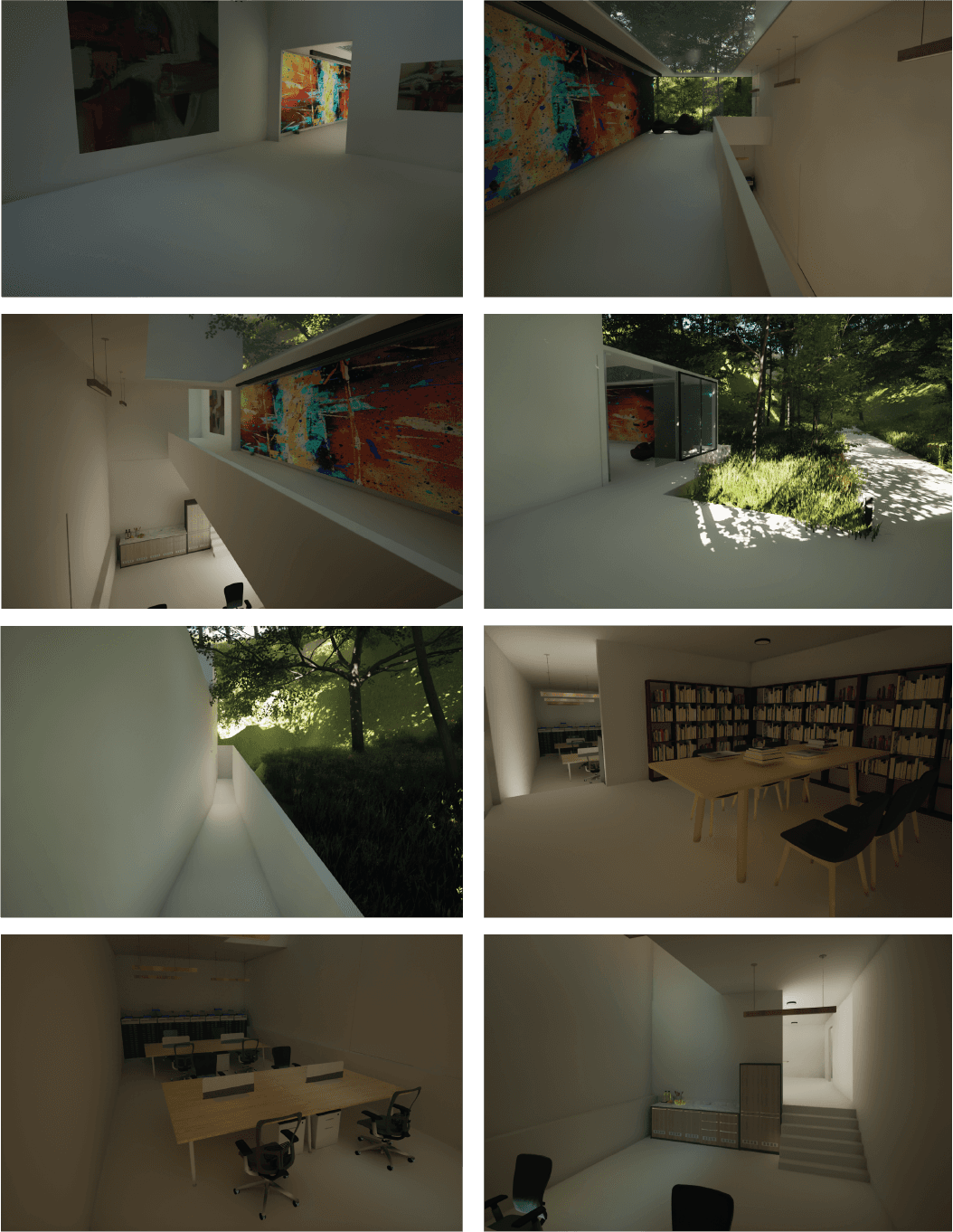
The pavilion acts as an open medium for artists, exhibitions, and experimentation, supporting the creation of new knowledge. Flexible spaces encourage exploration, collaboration, and the exchange of ideas, making the pavilion itself a platform for cultural and creative practice.
© The Pavilion Of Caustics 2024
Entry point, Elevator and the well
Lobby, Cafeteria and restrooms
Iso visualization
Exterior
Antechambers
Atrium of Reflection
Library and Backrooms
Koi Pond
© 2026 Dhruvraj Jadeja